Hydrogen Therapy Repairs Blood Vessel Cells Damaged by Bacterial Toxins
Hydrogen Repairs LPS-Induced Endothelial Progenitor Cells Injury via PI3K/AKT/eNOS Pathway
Research hubs: Cardiovascular System · Respiratory System
This research was done on cells or tissue in a lab, not in people or animals.
- Evidence type
- Laboratory study (cells or tissue)
- Authors
- Qingjie Mu, Kaixuan Lv, Jielun Yu, Shangmin Chu, Lichun Zhang, Lingyu Kong, Linlin Zhang, Yan Tian, Xiaopeng Jia, Benhong Liu, Youzhen Wei, Nana Yang
- Journal
- Frontiers in Pharmacology
- Year
- 2022
- PMID
- 35645804
- Study Type
- Cell Culture
- Delivery
- Gas
- Outcome
- Positive
- Peer Reviewed
- Yes
- Cited by
- 18 (OpenAlex, as of November 2026)
- Country
- China
TL;DR
Hydrogen gas helps repair damage to important lung repair cells caused by a toxic substance, likely through a specific cell signaling pathway.
Key Finding
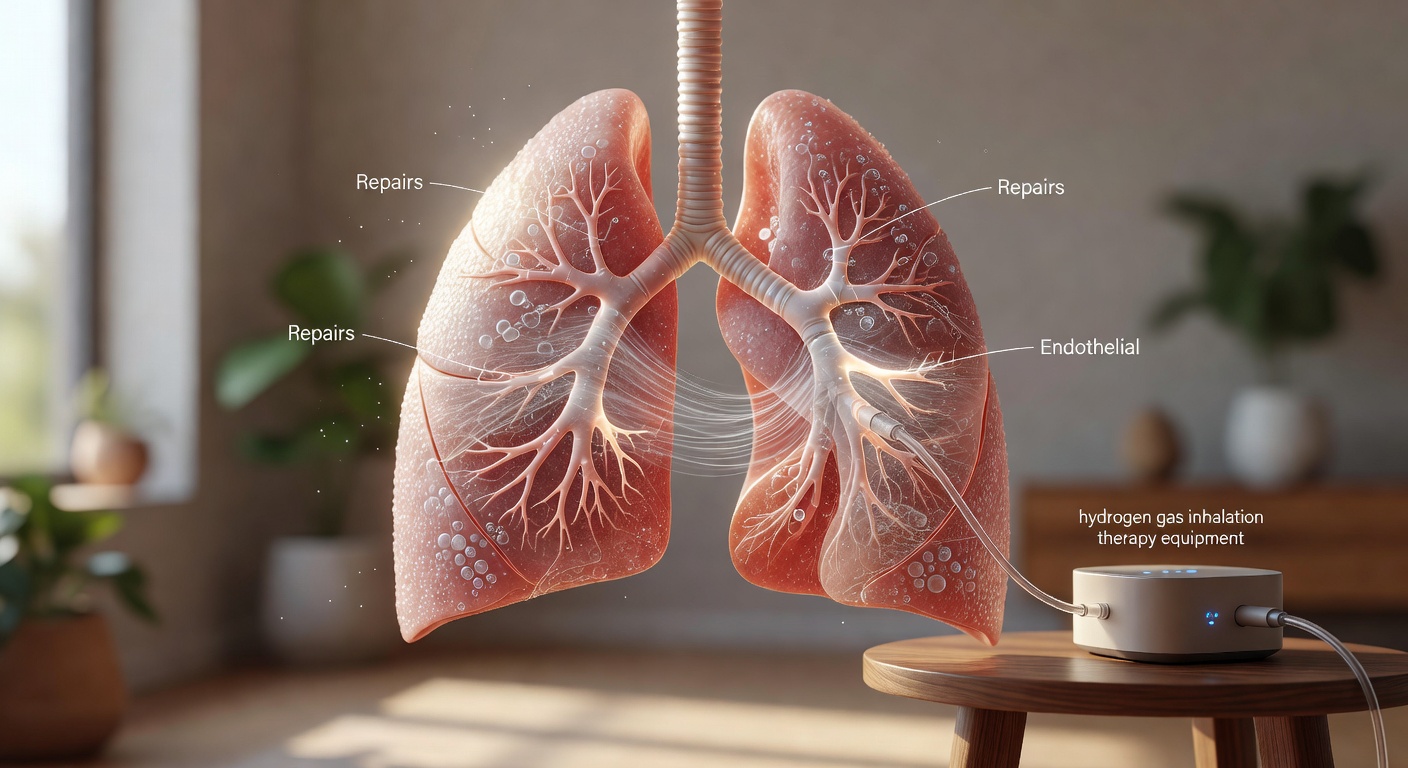
Hydrogen gas restored the ability of damaged endothelial progenitor cells to proliferate, migrate, and form new blood vessels by activating a specific cellular signaling pathway (PI3K/AKT/eNOS).
Summary
This laboratory study tested whether hydrogen gas could protect special cells called endothelial progenitor cells (cells that can develop into blood vessel cells) from damage caused by lipopolysaccharide, a toxic substance found in bacteria. Researchers treated mouse cells with hydrogen gas and found that it restored the cells' ability to multiply, move, and form new blood vessel structures that had been damaged. The protective effect appeared to work through activation of specific molecular pathways inside the cells.
Practical Takeaway
While this cell-culture study suggests hydrogen may have potential to protect blood vessel-forming cells from bacterial toxin damage, it is very early-stage research conducted only in laboratory conditions with mouse cells. Much more research, including animal studies and human trials, would be needed before any conclusions could be drawn about hydrogen's usefulness for treating lung or vascular conditions in people.
Abstract (excerpt)
Endotoxins and other harmful substances may cause an increase in permeability in endothelial cells (ECs) monolayers, as well as ECs shrinkage and death to induce lung damage. Lipopolysaccharide (LPS) can impair endothelial progenitor cells (EPCs) functions, including proliferation, migration…